Essay
They Tell Us to Be Quiet as a Punishment, Not as a Method
On selective empathy in psychology training
Selective empathy in psychology is rarely talked about. And when I say rarely, I mean almost never from the inside. They'll tell you empathy is the heart of the degree, and it is. What nobody tells you is that, in practice, professional empathy is tied to a contract, to an hour, to a commitment: it isn't a way of living every day, every moment. Saying that out loud feels like a sin. I'm going to say it, because I see it, because I live it, and because I think keeping quiet about it is costing us more than we admit.
A warning up front: this is not a scientific article. It's an opinion, it's what I see and what I live, and I'm writing it with no protection at all. I don't want to tell anyone what to read or deliver a sermon. And since in this text I ask everyone for data, I apply it to myself first: I speak from what I see, and I don't turn my experience into a universal law. What I bring here is what I see term after term, classroom after classroom. If something different happens in your classroom, I'm glad, and that's data too.
Before they throw Rogers at me
I know where the first missile is coming from, so I'll get ahead of it: Carl Rogers. Every time someone questions empathy as a norm, Rogers shows up as an argument from authority. And it's precisely in Rogers that the answer lies.
Rogers didn't let go of rigour. He multiplied it. The practicum he set up in Ohio was the first to bring supervised therapy into the academic training of future therapists. He recorded sessions when nobody wanted a third party listening to what happened in therapy, analysed hundreds of transcripts and measured his clients with tests before and after therapy to find out whether what he did worked. He himself wrote that listening to those recordings remained, for him, the best way to learn to improve as a therapist. In 1957 he published his famous conditions for therapeutic change, and my reading is that he put them forward to be tested, not as commandments. And the APA gave him an award in 1956 for his scientific contribution, not for his warmth.
There's more. Rogers was bothered that his empathy had become a slogan. He said the word "reflecting" ended up making him cringe, because his approach had been reduced to a technique of repeating feelings back. For him, empathising was understanding the other person's world as if you were that person, without ever losing that "as if". My reading is this: that "as if" is a frame. Rogers's empathy had a limit by definition; it was recorded, supervised and measured. Anyone who uses Rogers to demand empathy without rigour is ignoring that Rogers submitted his own empathy to science.
What I see in the classroom
Now, from the inside. In what I see of our training, empathy stopped having a meaning and became a Swiss Army knife. It saves you from the hard answer, wins you the argument in class and in the lift, and even sorts out a mess with the school office if you don't get on with the lecturer. Someone asks for a fact before giving an opinion, and out comes the knife: "you have to have empathy for your classmate", "you have to understand that they didn't read what you read". I've even heard it in meetings: "remember that we must be patient and, above all, empathetic with other people's answers and opinions, even when they're not correct".
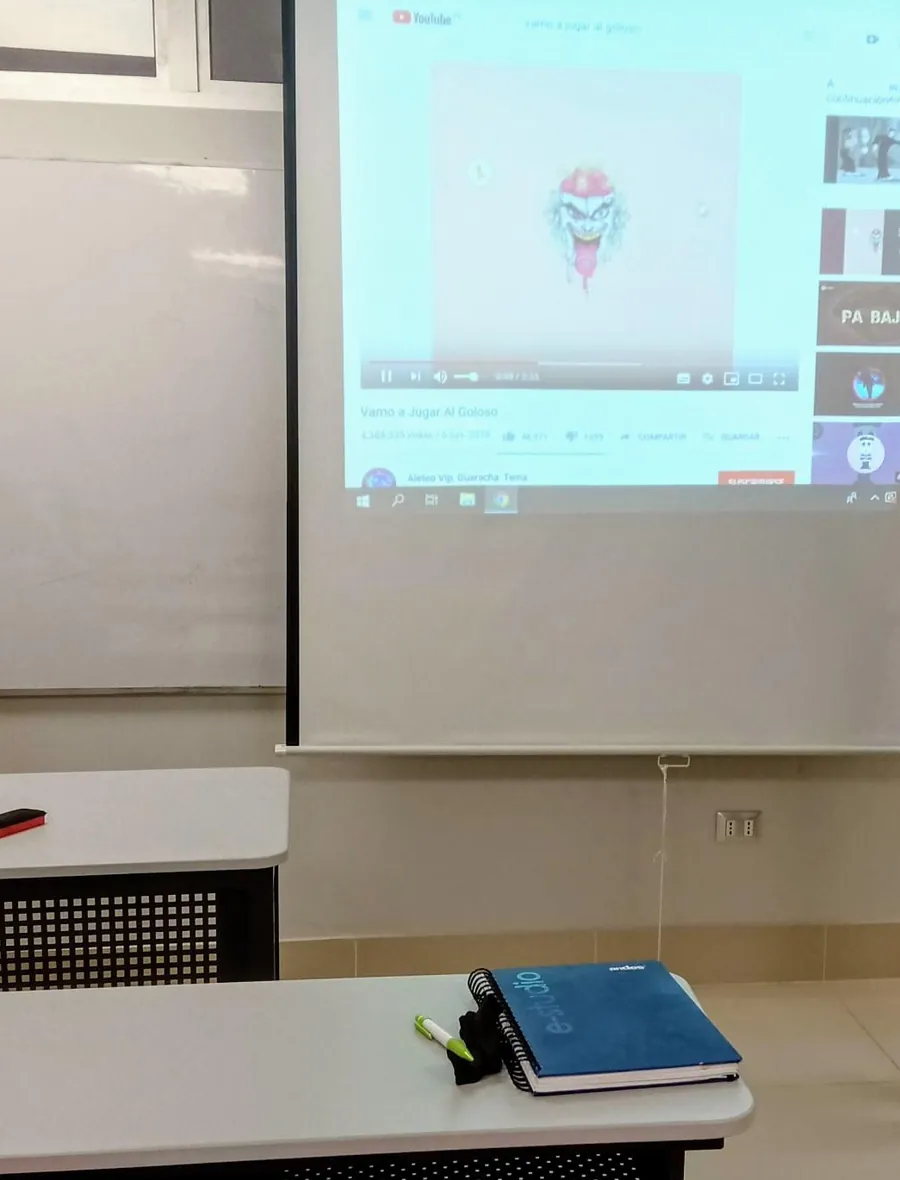
Nick Haslam called it concept creep: a psychological concept expanding until it covers anything at all. He studied it with harm and trauma; this is my own inference, but I think the same thing is happening to empathy. When a word works for everything, it no longer means anything, and then what it mostly does is end conversations.
That's why I keep coming back to the contract. Therapy-room empathy has a schedule, a price and a frame. Keeping it up 24 hours a day, in every class, every presentation, every group assignment where one or two people carry the whole group, isn't empathy: it's masochism. And let me be clear: I'm not saying empathy is the reason one or two people end up carrying everything; that has its own causes, starting with not setting limits in time. I'm saying that demanding empathy towards someone who doesn't do their share is asking you to put up with it in silence.
Nor am I mixing things up. I'm not talking about courtesy, about working without hostility or about keeping a group functioning: that's basic professional competence, in psychology and in any degree. I'm talking about something else: about when the word empathy is used to avoid answering.
There's a methodological trap there. A question that belongs to the level of knowledge ("what's that based on?") gets answered at the level of the relationship ("don't be harsh"). The question about the argument turns into an offence against the person. And with that bypass, direct and non-stop, intuition becomes common currency.
Careful, I'm not going to make the same mistake I'm criticising. Asking for the evidence isn't empathy: it's critical thinking. But they aren't enemies. Empathy lets me understand where my classmate is speaking from; critical thinking lets me ask what it's based on. One doesn't replace the other, and neither should be used to silence the other. What isn't respect is exempting someone from giving reasons, because that treats them as someone who can't give them.
I often see students who came into the degree thinking you don't need to read much or know maths, because this would be the degree of thinking. But if psychology were just the degree of thinking, anyone who thinks would already be a psychologist. I'm thinking right now, writing on my blog, and nobody has handed me a diploma.
Psychology demands, for a minimum of good work, a minimum of statistics and tonnes of reading. Without statistics you can't read a study in your own discipline critically: you're left believing what the abstract says, which is another way of deciding by intuition. And without deep reading you won't get far either. Whoever hasn't read Dostoevsky will struggle to see the abyss, whether outside himself or outside the practice. I don't say that because reading novels makes you a better person: Kidd and Castano published in Science in 2013 that reading literary fiction improved theory of mind, and in 2016 Panero and her team failed to replicate it. I say it because literature exposes you to extreme subjectivities the classroom doesn't show you, before you meet them for real.
The classroom is not the therapy room
Here, I think, is the heart of the problem. A psychologist in the classroom isn't a clinical psychologist in a therapy room. They're a teacher doing a teacher's job. In the therapy room empathy has a frame: there's a contract, there's privacy, there's professional confidentiality, there's a person who came asking for help. In the classroom there's none of that. Problems are heard among peers, in public, where we don't know who is really listening to what's said.
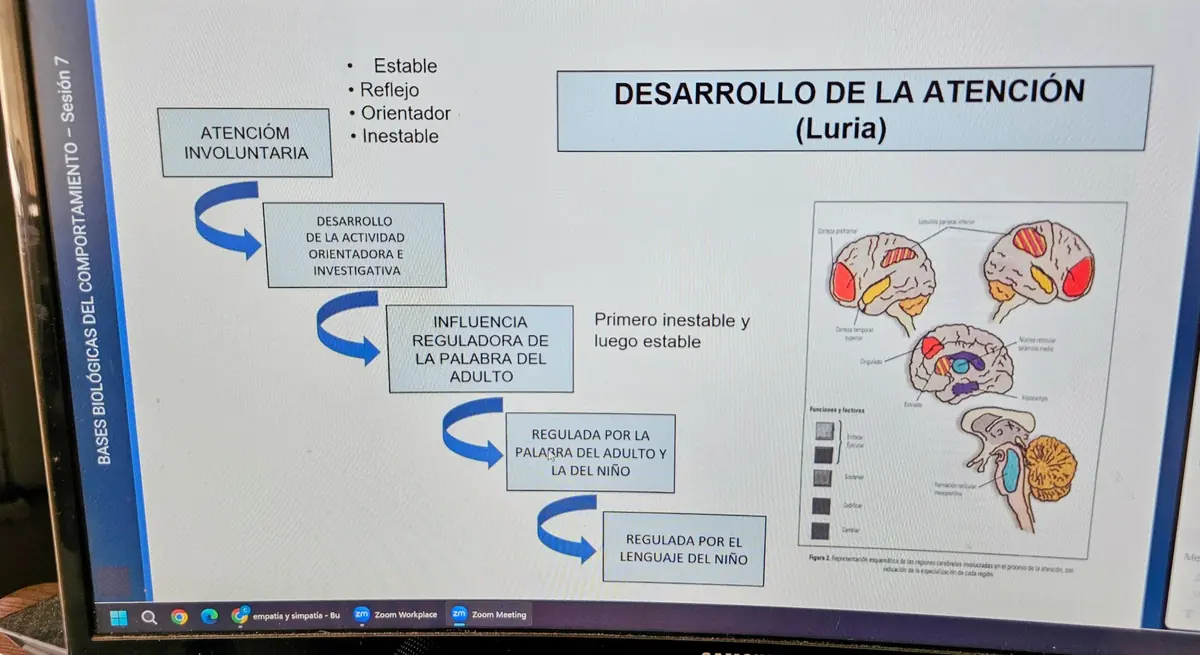
My reading is this: we're transplanting therapy-room empathy into a place where its frame doesn't exist. And empathy outside its frame stops being a technique and becomes a social norm. A social norm, once it becomes dogma, is used to silence people.
I notice it with dissenting opinions. The banner of the day is protecting minorities, and I agree. But in the degree, the one who thinks differently is often a minority too, and who listens to them? In a classroom where the dogma is "you have to understand everyone", nobody understands the one who thinks differently. "Understanding everyone" refutes itself the moment it excludes one person.
Careful, I'm not denying humanity. Active listening, treating the patient well, respect and ethics aren't at odds with hard science. What I'm saying is that they can't replace knowledge.
Silence as punishment
Sometimes I feel the classroom's shortcut is chit-chat. A question opens and n answers arrive, all of them from personal opinion. That opinion is valid and important, but it doesn't produce a universal law or guarantee that it will be useful to the person who asked you for advice.
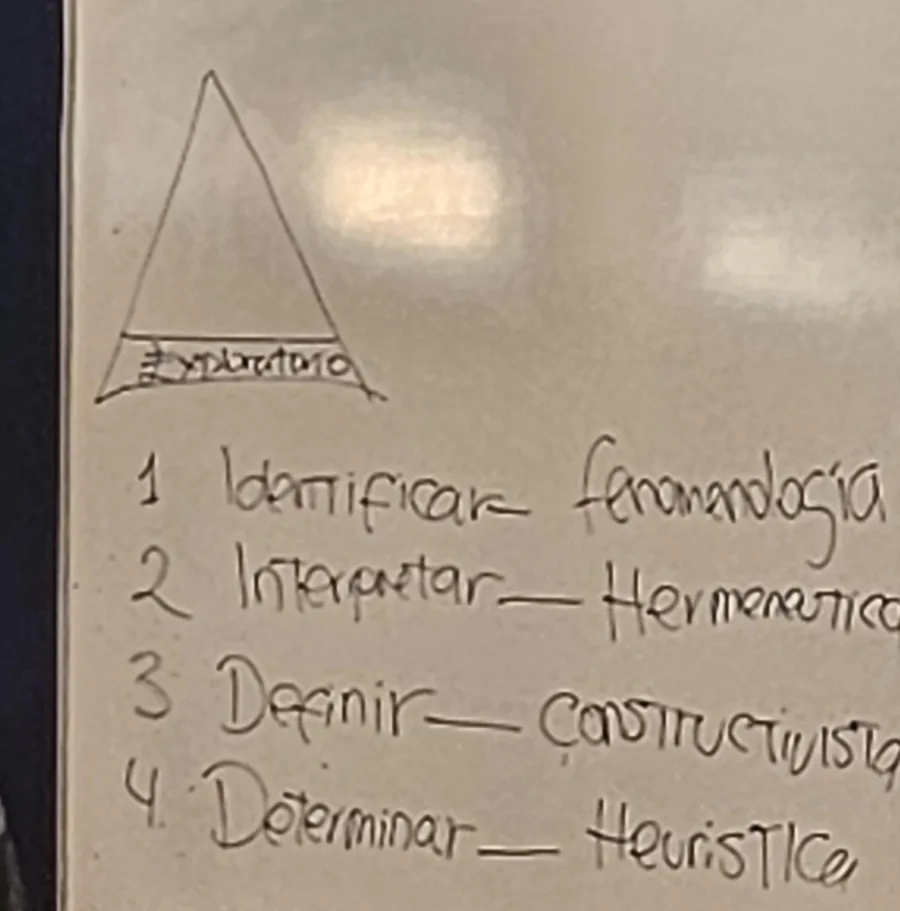
And there's something I find even more serious. They tell us to be quiet as a punishment, not as a method. And at the same time they let us talk about subjects we don't know without teaching us when to keep quiet. It's exactly the opposite of what science asks for. Silence as a method would be: "I don't know this subject, so first I listen, first I read". Nobody teaches that.
Two cartoons
Before going on, two cartoons. They prove nothing: they're caricatures, and caricatures exaggerate exactly what you need to see.
In a recent episode of Rick and Morty, "Rickuiem Mort a Dream", Rick puts an alien bug on Morty, a sympathid, that generates unlimited empathy. At first everything is wonderful: Morty understands everyone, the bully reforms and the school fills with good vibes. But Morty doesn't want to take it off, and the empathy spirals out of control until he empathises with an explosion that tears his arm off. In the end they discover the bug had eaten his real empathy centres.
My reading is this: it's empathy as ritual, an artificial empathy that eats the real one and can't tell a person from an explosion.
The counterexample is old and everybody knows it. In "HOMR", from The Simpsons, Homer has a crayon removed that had been lodged in his brain since childhood, and he becomes intelligent. He grows closer to Lisa, but cuts himself off from his friends. In the end he asks for the crayon to be put back in.
Both are absolutes and both end badly. Morty is empathy without limits; Homer, reason without empathy. And Homer is the counterexample I hold up to myself, and to everyone who thinks like me: if you only talk about science and can't connect with anyone, you end up alone, however right you are. That's why this essay doesn't say "reason yes, empathy no". The way out isn't to put the crayon back in either: it's not having to choose between thinking and connecting.
From the other side
I'm not only speaking as a student. Since before I started the degree I've been to many psychology appointments. I got very empathetic psychologists, who came across well, but I didn't feel I got any insight. And I have to confess: I'm not a difficult patient. I open up, I cooperate, I recognise the value of the profession. I know people who go to the psychologist as if to an intellectual duel, to take them apart in a western of witty dialogue until the psychologist says "what a genius you are". That's not me. Mine isn't humility or a pose: I go to look after my mental health and I try to make the most of my hour.
But my own way of being leads me to the hard question. Not "tell me what to do", but "tell me which solution suits me according to what the studies say". And the answer is always the same: "it depends on you, on your experience". Sometimes I'd just like to know whether what I'm living through is something someone has already measured, without having to open the DSM.
That's the other half that was missing in those appointments, and it's the same half I now see missing in the classroom. I ask what the evidence says about people in my situation, and they answer only from me. Both views are legitimate; the problem is that I'm only offered one. And I'm not making it up: in 2006 the APA defined evidence-based practice as the union of three things, the best research evidence, clinical expertise, and the patient's characteristics and preferences. When the answer is only "based on you", one of the three legs is being used. Asking for the missing one isn't arrogance: it's the official definition.
And so I'm not misread: empathy works, and that's data too. Studies on common factors in psychotherapy, with Bruce Wampold as their best-known advocate (Wampold, 2015; Wampold & Imel, 2015), hold that the therapeutic alliance and empathy predict a good part of the outcome, sometimes more than the specific technique. I don't dispute it; on the contrary, it proves my point: even the best defence of empathy is a measurement. And there's a nuance I think is key. A meta-analysis by Elliott and his team, published in 2023 with 43 samples, found practically no relationship between using empathic reflections or not and the effectiveness of therapy, and it distinguishes between reflection as a technique and the empathic quality of the relationship. My reading is this: empathy as ritual predicts nothing; empathy as relationship does. It's the same thing Rogers meant when the word "reflecting" made him cringe.
That's why my experience as a patient refutes nothing. It's my experience, and I tell it as such.
How it looks from outside
Time to be honest. I don't use the data that follow as a weapon of convenience or as a portrait of Peruvian reality: they're studies from other countries and other years. I bring them for contrast.
Lilienfeld documented it in the American Psychologist in 2012: large percentages of the public view psychology's scientific status with scepticism. In an online survey of 1,000 adults that the APA itself published in 2009, only 22% associated the practice of psychology "a lot" with scientific techniques and practices. Krull and Silvera showed in 2013 that people judge what's scientific by the topic and the equipment, not by the method: natural-science topics seem more like science than behavioural ones, even when the method is the same. And in 2022, a study in Scientific Reports found that chemists, biologists and physicists are the figures people have in mind when they think of a scientist.
The interesting part isn't that, but what the psychologists who study it say themselves. Lilienfeld acknowledges that part of the scepticism comes from the public's errors, but that another part reflects psychology's failure to police itself and to get its own house in order. Among the criticisms he examines is the claim that psychology is mere common sense, and among the public's errors he lists hindsight bias: everything seems obvious once you know it. My reading is that this is where the myth of "the degree of thinking" comes from. Ferguson, in 2015, was harsher: much of the problem is internal, from the replication crisis and the defensive reactions to it to the politicised statements of professional advocacy groups such as the APA itself.
I have no way of measuring it from my classroom, and I say so. But if the profession itself contributes to its bad image, as Lilienfeld and Ferguson argue, a classroom where "have empathy" replaces "what's the evidence?" is a good candidate for one of the places where that image gets made. It's a hypothesis, not a conclusion.
The right and the duty
Compare it with engineering or the medical sciences. Nobody asks them to defend their status as science. Psychology, yes. And yet, on paper, we're in the same group as medicine. Peru's Law 28369, the Psychologist's Work Law, defines the psychologist as a professional of human behaviour, competent in the promotion, prevention, diagnosis, treatment and recovery of mental health. And in April 2026, Law 32575 amended the Mental Health Law to set down that the diagnosis of a mental health problem is a comprehensive process in which health professionals take part according to their own professional laws. Ours says diagnosis. It's true that, for the "comprehensive diagnosis", the second paragraph of that same law names only physicians. But the general right is written down.
So let's get to it. If the law gives us the right to diagnose, why would we have the right not to learn statistics, not to read industrial quantities of theories and studies? I say it with no protection and it's my opinion: nobody tells you their private life because you know how to think. They tell you because you're supposed to know. Otherwise, I can't tell you whether you're their nicely spoken friend or the professional you should be.
And this isn't news, nor am I looking for a scandal. People choose psychology because they're good listeners, because their family says they have empathy, because they feel they can change the world. Something similar is surely said at the open day of any degree: the one who wants to be a doctor because they like helping, the one who wants to be an engineer because they like building things. But in none of them is that used as an excuse to run away from maths, from hard science or from deep reading. In medicine, wanting to help doesn't save you from biochemistry.
You are not alone
I'll finish with the most human thing I can confess: being alone is a reality. And I think it's right and necessary for a psychologist to be able to tell you that you're not alone. But not as a cliché or as an instant answer tied to the need to empathise, but because you really aren't, and there's evidence that shows it, whatever the instruction manual, the ICD or the DSM say.
Evidence doesn't compete with empathy. It can be its deepest form. "You're not alone" said by reflex is a cliché. "You're not alone: what you're going through has been studied in other people, and this is what we know" is company with a foundation. An answer without both parts shows, and it shows more than professionals think.
Translated from the Spanish original.
Sources
- American Psychological Association. (n.d.). Carl R. Rogers [APA presidents' biography]. https://www.apa.org/about/governance/president/carl-r-rogers
- American Psychological Association. (2009, March 1). And the survey says... Monitor on Psychology, 40(3), 29. https://www.apa.org/monitor/2009/03/survey
- APA Presidential Task Force on Evidence-Based Practice. (2006). Evidence-based practice in psychology. American Psychologist, 61(4), 271–285. https://doi.org/10.1037/0003-066X.61.4.271
- Campbell, H. A. (Writer), & Olsen, D. E. (Director). (2026, July 12). Rickuiem Mort a Dream (Season 9, Episode 8) [TV series episode]. In Rick and Morty. Adult Swim.
- Elliott, R., Bohart, A., Larson, D., Muntigl, P., & Smoliak, O. (2023). Empathic reflections by themselves are not effective: Meta-analysis and qualitative synthesis. Psychotherapy Research, 33(7), 957–973. https://doi.org/10.1080/10503307.2023.2218981
- Ferguson, C. J. (2015). «Everybody knows psychology is not a real science»: Public perceptions of psychology and how we can improve our relationship with policymakers, the scientific community, and the general public. American Psychologist, 70(6), 527–542. https://doi.org/10.1037/a0039405
- Gligorić, V., van Kleef, G. A., & Rutjens, B. T. (2022). Social evaluations of scientific occupations. Scientific Reports, 12, 18339. https://doi.org/10.1038/s41598-022-23197-7
- Haslam, N. (2016). Concept creep: Psychology's expanding concepts of harm and pathology. Psychological Inquiry, 27(1), 1–17. https://doi.org/10.1080/1047840X.2016.1082418
- Jean, A. (Writer), & Anderson, M. B. (Director). (2001, January 7). HOMR (Season 12, Episode 9) [TV series episode]. In The Simpsons. Fox.
- Kidd, D. C., & Castano, E. (2013). Reading literary fiction improves theory of mind. Science, 342(6156), 377–380. https://doi.org/10.1126/science.1239918
- Krull, D. S., & Silvera, D. H. (2013). The stereotyping of science: Superficial details influence perceptions of what is scientific. Journal of Applied Social Psychology, 43(8), 1660–1667. https://doi.org/10.1111/jasp.12118
- Law No. 28369, Psychologist's Work Law [Ley del Trabajo del Psicólogo]. Diario Oficial El Peruano, 29 October 2004, p. 279255.
- Law No. 32575, amending article 25 of Law 30947, the Mental Health Law, to specify the competence of health professionals for diagnosis [Ley que modifica el artículo 25 de la Ley 30947]. Diario Oficial El Peruano, 8 April 2026.
- Lilienfeld, S. O. (2012). Public skepticism of psychology: Why many people perceive the study of human behavior as unscientific. American Psychologist, 67(2), 111–129. https://doi.org/10.1037/a0023963
- Panero, M. E., Weisberg, D. S., Black, J., Goldstein, T. R., Barnes, J. L., Brownell, H., & Winner, E. (2016). Does reading a single passage of literary fiction really improve theory of mind? An attempt at replication. Journal of Personality and Social Psychology, 111(5), e46–e54. https://doi.org/10.1037/pspa0000064
- Rogers, C. R. (1957). The necessary and sufficient conditions of therapeutic personality change. Journal of Consulting Psychology, 21(2), 95–103. https://doi.org/10.1037/h0045357
- Rogers, C. R. (1975). Empathic: An unappreciated way of being. The Counseling Psychologist, 5(2), 2–10. https://doi.org/10.1177/001100007500500202
- Wampold, B. E. (2015). How important are the common factors in psychotherapy? An update. World Psychiatry, 14(3), 270–277. https://doi.org/10.1002/wps.20238
- Wampold, B. E., & Imel, Z. E. (2015). The great psychotherapy debate: The evidence for what makes psychotherapy work (2nd ed.). Routledge. https://doi.org/10.4324/9780203582015
Every claim in this essay was read at its source; the verification file records, for each reference, how it was checked and what was corrected before publication. What is marked as my reading is the author’s inference. What I tell about the classroom and my own appointments is testimony, not data. The photos are the author’s.